








 Games Like Wildgate


It’s sad, but there are only a few games out there with fresh ideas that are well executed. Fortunately, one of them is Wildgate, a title developed by Moonshot Games and published by Dreamhaven. Part of Epic Games’ recent giveaway, it combines the usual on-foot FPS combat with ship combat and management. Players seamlessly transition between piloting, repairing systems, operating weapons, boarding enemy vessels, and defending their own ship from intrusion. All for the goal of obtaining artifacts. So, should you give the game a shot? Let’s take a look at what it has to offer:
Wildgate is purely a PvPvE experience. Apart from small tidbits of lore scattered throughout the game, there are no cutscenes or character arcs, although the characters themselves are quite interesting. The game is set in The Reach, a dangerous region filled with wreckage, hostiles, valuable technology, and extremely valuable artifacts rumored to grant immense power. And yes, out of four teams, only one will be able to leave with it via the titular Wildgate.
Wildgate is not your typical FPS: it is best described as a tactical PvPvE shooter with shared-objective extraction. Matches are quite long - they last 30-40 minutes and almost always start with exploration and preparation. Crews scavenge resources across the Reach, upgrade ship systems, and track the movement of enemy teams. Although combat can happen at any moment, fighting early is a bad idea, as it can hold you up and create long-term problems.
Matches may be long, and there are a lot of chores, like repairing ship systems, driving your ship, and resource gathering. Players rarely do one thing; one may pilot the ship, one repairs hull damage with the multitool, while another is engaged in defense. A lot of coordination is required, which is why voice chat is necessary; a bad or uncommunicative teammate can ruin the experience.
All things considered, Wildgate is not about winning firefights or killing opponents and environmental threats like aliens; smart crews would disengage, reposition, or force other teams into disadvantageous situations. Eventually, players will converge on the artifact, and mayhem will break loose.
In terms of controls and gameplay mechanics, Wildgate excels. The gunplay isn’t the best in the industry, but the experience is highly comparable to something akin to a mix of Valorant and Team Fortress. Note that there are several types of personal and ship weapons, like something akin to a machine gun, to one that shoots sticky explosives and sniper rifles.
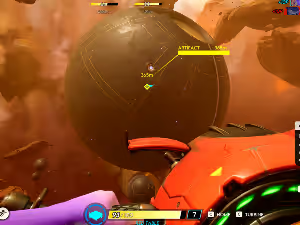
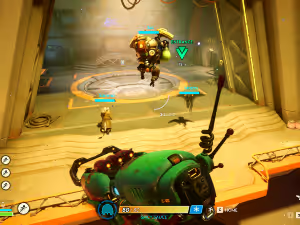
In terms of presentation, Wildgate is a good-looking game. It reminded me a lot of the now-closed Dauntless; Wildgate looks like a first-person version of it. Ship interiors and exterior environments are crisp and clear, letting players identify points of concern, objectives, and enemies. The same can be said about its audio, and its performance on a mid-tier laptop which is smooth and relatively stable.
Wildgate is a multiplayer game built around pressure, coordination, and shared responsibility. It succeeds when crews communicate and understand their roles. It struggles when players treat it like a standard deathmatch shooter.
For groups willing to learn its systems, Wildgate delivers tense, memorable matches driven by player decisions rather than scripted outcomes. It is not a casual pick-up-and-play FPS, but it is a focused and confident take on crew-based competitive play.
Wildgate Summary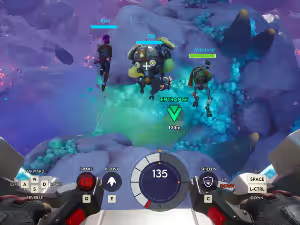
Video - MMO Square
Related Blog Entries
Fri, Jan 9, 2026New Game Added: Wildgate


